
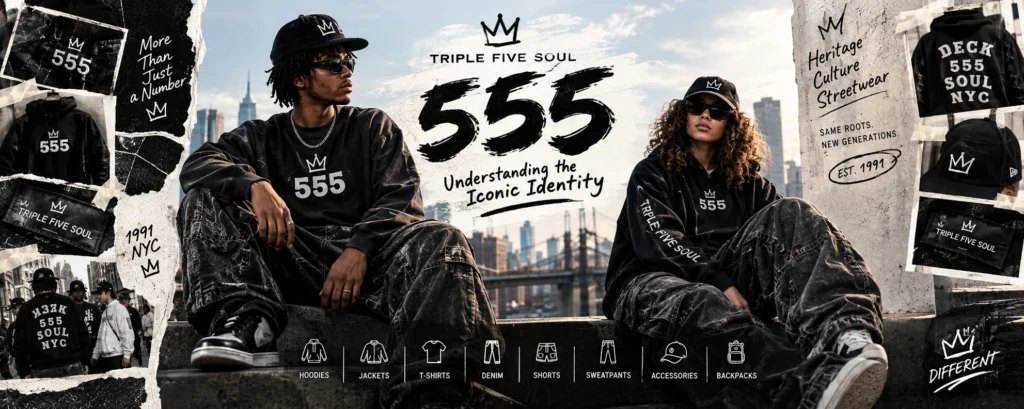
The Meaning Behind Triple 5 Soul
Triple Five Soul 555 represents more than a name printed across streetwear. It is an identity built from New York creativity, music, art, community, and the freedom to approach fashion differently. The name is commonly connected with Triple Five Soul, Triple 5 Soul, and 555 Soul, three expressions that have become part of the same cultural story. The brand began in New York City in 1989 under founder Camella Ehlke, developing from a Lower East Side storefront and creative space into a recognizable name within streetwear culture. Its identity was shaped by the people, sounds, artwork, and everyday energy surrounding the brand rather than by traditional fashion rules.
Where the 555 Soul Identity Started
The roots of 555 Soul can be traced to the Lower East Side, where Camella Ehlke worked from a storefront and apartment on Ludlow Street. Early clothing was often handmade, with materials sourced from nearby garment and tailor shops. This gave the brand an individual character from the beginning because the pieces were being created directly within the environment that inspired them. The original store also became a meeting place for creative people, connecting clothing with music, art, DJs, dancers, and other parts of downtown culture.
Why the Number 555 Became Recognizable
The 555 element became one of the strongest visual identifiers associated with the brand. It could appear through logos, labels, graphics, accessories, and clothing details, allowing the number itself to become recognizable within streetwear. Rather than needing an elaborate explanation, the simple combination of numbers and the word Soul created a memorable identity. Over time, variations such as 555 Soul, Triple 5 Soul, and Triple Five Soul became connected to the same creative world, giving the brand a flexible visual language that could work across different types of clothing.
Triple Five Soul and New York Street Culture
New York was not simply a location for Triple Five Soul; it was an important part of the brand’s personality. The Lower East Side of the late 1980s and 1990s offered a mixture of artists, musicians, independent businesses, clubs, record labels, skaters, and neighborhood communities. Triple Five Soul developed within that environment and reflected its energy through clothing that felt practical, expressive, and unconventional. This connection helped separate the brand from fashion that was created primarily around seasonal runway trends.
The Role of Hip-Hop in 555 Soul
Hip-hop became one of the most important cultural influences surrounding 555 Soul. The brand’s own heritage records show that musicians, DJs, and dancers wore its early pieces, while names connected with the wider scene became part of its history. De La Soul, Mos Def, Q-Tip, and members of the Rocksteady Crew are among the cultural figures associated with the brand’s early years. This relationship helped Triple 5 Soul become connected with a generation that viewed clothing as part of music, identity, and community rather than simply something worn for appearance.
Clothing as a Form of Expression
One of the strongest ideas behind Triple Five Soul is that clothing can communicate personality. A hoodie, T-shirt, jacket, or hat does not need to be complicated to make an impression. The right logo, graphic, color, or silhouette can represent a particular attitude. This approach helped 555 Soul clothing develop a recognizable personality while still allowing individuals to interpret the pieces in their own way. The result was streetwear that could feel personal instead of looking like a uniform.
The Importance of the Soul Concept
The word “Soul” gives the identity another layer because it suggests personality, creativity, and human expression. It makes the name feel different from a purely commercial clothing label. Combined with the 555 identifier, it creates a phrase that can function as a logo while also carrying a cultural feeling. This balance between branding and personality has helped Triple 5 Soul remain recognizable even as its clothing and visual direction have changed over the years.
The Original Handmade Approach
The handmade origins of the brand are important when understanding its identity. Early pieces were created by Camella Ehlke using deadstock fabrics and other available materials, with hand-sewn tie hats and hoodies becoming part of the early visual language. This approach was closely connected to the environment around the Lower East Side and gave the clothing a quality that felt experimental and personal. It also demonstrated that creativity could exist outside traditional fashion production.
The Iconic 1/4 Zip and Design Experimentation
The 1/4 zip shirt became another important part of the brand’s early history. According to the brand’s heritage archive, the piece featured distinctive zipper tape and details while developing from fabrics sourced from New York’s garment environment. Different materials and color combinations were explored before the design moved toward more casual knits. This willingness to experiment with materials and construction became an important part of the Triple Five Soul identity.
The Evolution From 555 Soul to Triple Five Soul
As the brand developed, its identity expanded beyond the earliest handmade pieces. The name Triple Five Soul became increasingly recognizable while the clothing moved into broader categories and markets. The brand eventually developed international connections, including stores and special collections in Japan. The identity remained recognizable because its core combination of logos, graphics, relaxed clothing, and cultural references continued even as the product range evolved.
Triple 5 Soul and Japanese Streetwear Culture
Japan became an important chapter in the story of Triple Five Soul. The brand’s heritage archive notes that it operated stores in Tokyo, Osaka, and Fukuoka and created clothing specifically for those locations. Clean arch-logo sweatshirts became part of that period, while events and collaborations helped connect the brand with Japan’s fashion and music communities. This international expansion demonstrated that the identity of Triple 5 Soul could travel beyond New York while still maintaining its original cultural character.
Logos That Became Part of the Culture
The visual identity of 555 Soul has always depended heavily on logos. Different versions appeared throughout the brand’s history, sometimes using bold lettering and sometimes creating cleaner or more experimental treatments. The logos gave the clothing an immediate identity while leaving enough room for designers and artists to interpret them in different ways. This is one reason 555 Soul can be recognized through relatively simple visual elements without needing excessive decoration.
Graphic Design and the 555 Identity
Graphic design has played a major role in making Triple Five Soul memorable. Early catalogs, advertisements, labels, banners, and clothing graphics often carried a handmade or collage-like quality. The brand’s heritage includes a first catalog created using a cut-and-paste approach, showing how its visual communication was connected to independent creative methods. These details helped make the identity feel closer to an art project or cultural publication than a conventional fashion campaign.
Triple Five Soul and Creative Collaboration
Collaboration has been another important part of the brand’s identity. Throughout its history, Triple Five Soul Sweatshirt worked with musicians, DJs, artists, record labels, and other creative figures. The brand’s heritage documents projects involving names such as Rawkus and artists including Stash, while its campaigns also connected clothing with music and cultural personalities. These collaborations allowed the brand to exist within a larger creative network rather than operating only as a clothing label.
The “Define Your Soul” Idea
The phrase “Define Your Soul” became part of the brand’s cultural language through campaigns and catalogs. The concept fits naturally with the identity of Triple Five Soul because it focuses on individuality rather than telling people exactly how they should dress. The message suggests that clothing can become one part of a person’s creative identity. Campaigns featuring figures such as Mos Def helped connect that idea with the music and street culture that had influenced the brand from the beginning.
555 Soul Beyond Clothing
The brand’s identity has never been limited entirely to shirts, hoodies, or jackets. Its history includes mixtapes, events, accessories, store environments, and creative projects. Music became particularly important, with Triple Five Soul eventually creating a label and continuing to connect clothing with DJs and musicians. This broader approach explains why the brand can be discussed as a cultural lifestyle as well as a streetwear label.
The Connection Between Music and Fashion
Music and fashion have always influenced one another, but Triple Five Soul made that relationship particularly visible. Its stores and campaigns existed within a world where DJs, rappers, skaters, artists, and designers interacted naturally. Clothing became part of the same creative conversation as mixtapes, performances, artwork, and independent magazines. That environment helped create a brand identity that felt alive rather than purely commercial.74iiswar.com
Triple Five Soul and Skate Culture
Skateboarding also contributed to the broader identity of Triple Five Soul. The brand’s heritage includes a 555 skate team, showing how skate culture became part of its community. Relaxed silhouettes, practical clothing, and graphic-driven designs naturally worked with skateboarding’s emphasis on movement and individuality. This connection added another dimension to the brand’s streetwear character and helped it appeal to people outside the traditional music scene.
How the Identity Influenced Streetwear
Triple Five Soul emerged during a period when the modern meaning of streetwear was still developing. Its combination of music, art, skateboarding, casual clothing, and independent creativity reflected a cultural model that later became familiar throughout fashion. The brand did not simply rely on a single trend. Instead, it brought several creative communities together through clothing. This approach helped make Triple 5 Soul part of the history of streetwear’s evolution.
Why the 555 Identity Still Stands Out
The strength of the 555 identity comes from its simplicity and history. A number, a word, and a recognizable graphic language can become powerful when they are connected to a genuine cultural story. Triple Five Soul developed that story through years of creative projects, community relationships, music, and fashion experimentation. As a result, the 555 name can carry meaning even when it appears on a relatively simple garment.
Bringing 555 Soul Into Modern Outfits
Today, Triple Five Soul pieces can be incorporated into modern streetwear without recreating an entire 1990s outfit. A graphic T-shirt can work with relaxed denim and sneakers, while a hoodie can be combined with cargo trousers and a contemporary jacket. Accessories can remain simple so that the 555 graphic becomes the main visual feature. This approach allows the heritage of the brand to remain visible while the overall outfit still feels current.
Why Authenticity Matters
Authenticity is an important reason heritage streetwear continues to attract attention. Triple Five Soul has a documented history that connects its clothing to real creative communities, handmade production, music, and New York culture. The brand’s story was built over time rather than created afterward to make ordinary clothing appear culturally significant. That history gives the 555 identity context and helps explain why its older designs continue to inspire interest.
The Modern Return of Triple Five Soul
The brand’s story also includes a modern revival led by founder Camella Ehlke. The relaunch was presented as a return to the creative energy of the original 555 Soul era, with new work drawing on archive pieces, handmade designs, and the spirit of the Lower East Side. The return demonstrates how a historic streetwear identity can be revisited without simply reproducing the past. kidsuper.com.co
What Triple Five Soul 555 Represents Today
Today, Triple Five Soul 555 can be understood as a connection between streetwear history and modern creative expression. The identity brings together the original energy of New York with influences from hip-hop, skateboarding, art, music, and independent design. Its logos and graphics remain recognizable, but the deeper story is what gives them meaning. The brand shows how clothing can become part of a cultural conversation that continues across generations.
Final Thoughts on the Triple Five Soul Identity
Triple Five Soul 555 is memorable because its identity was built through people, places, music, art, and experimentation. From Camella Ehlke’s early handmade pieces on Ludlow Street to the brand’s international expansion and later revival, 555 Soul developed a visual and cultural language that became closely connected with streetwear. Triple Five Soul, Triple 5 Soul, and 555 Soul may appear in different forms, but they all point toward the same underlying idea: clothing can be a way to express creativity, community, and individuality. That combination is what continues to give the 555 identity its distinctive place in streetwear culture.